Chemistry Journal of Moldova
- Journal Citation Reports for year 2025:
- Impact Factor (IF) 0.5;
- 5-year Journal IF 0.6;
- SCOPUS Journal Metrics for year 2025:
- CiteScore 0.9;
- Source Normalized Impact per Paper (SNIP) 0.334;
- SCImago Journal Rank (SJR) 0.152.




TOP DOWNLOADED ARTICLES
1. SONOCHEMICAL SYNTHESIS OF HEMATITE
NANOPARTICLES
Mihail Iacob
(downloads: 1360)
2. THE ROLE OF HALOGEN BONDING IN THE
SYNTHESIS AND DESIGN OF TAP COMPLEXES
Namiq Shikhaliyev, Ayten Niyazova, Abel Maharramov, Agaisa Askerov, Nazrin Zeynalli, Viktor Khrustalev, Peri Huseynova
(downloads: 953)
3. SILVER AND ZINC NANOPARTICLES
BIOSYNTHESIS USING LAUREL EXTRACT AND
INVESTIGATION OF THE PHOTOCATALYTIC
PROPERTIES
Recep Taş, Ebru Köroğlu, Ahmet Karakuş, Ali Savaş Bülbül, Nilay Akkuş Taş
(downloads: 916)
4. SYNTHESIS OF DIFFERENT STRUCTURAL TYPES
OF ZEOLITES IN THE
HALLOYSITE-DOLOMITE-OBSIDIAN SYSTEM
Gunel Mamedova
(downloads: 874)
5. DERIVATIZATION TECHNIQUES BASED ON
CHARGE TRANSFER REACTIONS FOR
SPECTROPHOTOMETRIC DETERMINATION OF
JOSAMYCIN IN VARIOUS DOSAGE FORMS
Abdelghani Mahmoudi and Ann Van Schepdael
(downloads: 833)
6. A NOVEL GREEN SYNTHESIS OF NICKEL OXIDE
NANOPARTICLES USING ARABIC GUM
Saeid Taghavi Fardood, Ali Ramazani, Sajjad Moradi
(downloads: 812)
7. SYNTHESIS, CHARACTERIZATION AND
MOLECULAR DOCKING OF CHLORO-SUBSTITUTED
HYDROXYXANTHONE DERIVATIVES
Emmy Yuanita, Harno Dwi Pranowo, Mustofa Mustofa, Respati Tri Swasono, Jufrizal Syahri, Jumina Jumina
(downloads: 670)
8. ORGANOCHLORINE PESTICIDES RESIDUES IN
SOIL OF SOROCA DISTRICT, REPUBLIC OF
MOLDOVA
Elena Culighin
(downloads: 509)
9. ROLE OF CYCLODEXTRINS IN NEW
ANTIMYCOBACTERIAL FORMULATIONS
Veaceslav Boldescu, Fliur Macaev, Gheorghe Duca
(downloads: 505)
10. INVESTIGATION OF VARIOUS INFLUENCING
FACTORS OF HYDROTHERMAL SYNTHESIS OF
ANALCIME ZEOLITE
Gunel Mamedova, Gunel Nasirli
(downloads: 495)
NANOPARTICLES
Mihail Iacob
(downloads: 1360)
2. THE ROLE OF HALOGEN BONDING IN THE
SYNTHESIS AND DESIGN OF TAP COMPLEXES
Namiq Shikhaliyev, Ayten Niyazova, Abel Maharramov, Agaisa Askerov, Nazrin Zeynalli, Viktor Khrustalev, Peri Huseynova
(downloads: 953)
3. SILVER AND ZINC NANOPARTICLES
BIOSYNTHESIS USING LAUREL EXTRACT AND
INVESTIGATION OF THE PHOTOCATALYTIC
PROPERTIES
Recep Taş, Ebru Köroğlu, Ahmet Karakuş, Ali Savaş Bülbül, Nilay Akkuş Taş
(downloads: 916)
4. SYNTHESIS OF DIFFERENT STRUCTURAL TYPES
OF ZEOLITES IN THE
HALLOYSITE-DOLOMITE-OBSIDIAN SYSTEM
Gunel Mamedova
(downloads: 874)
5. DERIVATIZATION TECHNIQUES BASED ON
CHARGE TRANSFER REACTIONS FOR
SPECTROPHOTOMETRIC DETERMINATION OF
JOSAMYCIN IN VARIOUS DOSAGE FORMS
Abdelghani Mahmoudi and Ann Van Schepdael
(downloads: 833)
6. A NOVEL GREEN SYNTHESIS OF NICKEL OXIDE
NANOPARTICLES USING ARABIC GUM
Saeid Taghavi Fardood, Ali Ramazani, Sajjad Moradi
(downloads: 812)
7. SYNTHESIS, CHARACTERIZATION AND
MOLECULAR DOCKING OF CHLORO-SUBSTITUTED
HYDROXYXANTHONE DERIVATIVES
Emmy Yuanita, Harno Dwi Pranowo, Mustofa Mustofa, Respati Tri Swasono, Jufrizal Syahri, Jumina Jumina
(downloads: 670)
8. ORGANOCHLORINE PESTICIDES RESIDUES IN
SOIL OF SOROCA DISTRICT, REPUBLIC OF
MOLDOVA
Elena Culighin
(downloads: 509)
9. ROLE OF CYCLODEXTRINS IN NEW
ANTIMYCOBACTERIAL FORMULATIONS
Veaceslav Boldescu, Fliur Macaev, Gheorghe Duca
(downloads: 505)
10. INVESTIGATION OF VARIOUS INFLUENCING
FACTORS OF HYDROTHERMAL SYNTHESIS OF
ANALCIME ZEOLITE
Gunel Mamedova, Gunel Nasirli
(downloads: 495)



2025 Volume 20, no.2
Author(s):
Field: Natural product chemistry and synthesis
Type: Research paper
Issue: 2025 Volume 20, no.2
Pages: 94-100
Alexandru Ciocarlan, Ion Dragalin, Violeta Popescu, Lidia Lungu, Lucian Lupascu, Aculina Aricu, Tatiana Calugaru-Spataru, Zinaida Balmus, Dmitrii Grozdov, Pavel Nekhoroshkov, Inga Zinicovscaia
Field: Natural product chemistry and synthesis
Type: Research paper
Issue: 2025 Volume 20, no.2
Pages: 94-100
Full Text (PDF): Download
https://doi.org/10.19261/cjm.2025.1411
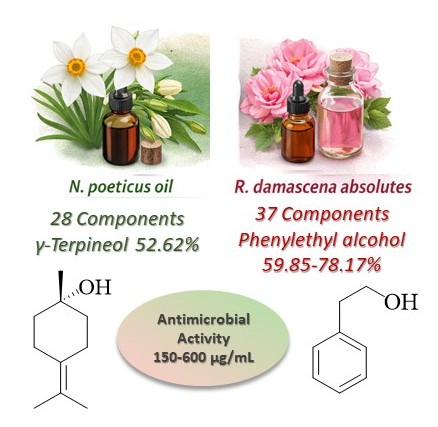
Graphycal Abstract: The chemical composition and antimicrobial activity of Narcissus poeticus L. essential oil and Rosa damascena Mill. absolutes of Moldovan origin were studied. Using GC–MS analysis 28 constituents of N. poeticus essential oil and 37 of R. damascena absolutes were identified. The γ-terpineol (52.62%) was the main component of N. poeticus oil, while the phenylethyl alcohol predominated in R. damascena absolutes (59.85–78.17%). Both products exhibited strong in vitro antibacterial and antifungal activity against four bacterial strains and two fungal species, with effective concentrations of 150–300 μg/mL and 300–600 μg/mL, respectively.
Downloads: 154
Author(s):
Field: Inorganic and coordination chemistry
Type: Research paper
Issue: 2025 Volume 20, no.2
Pages: 33-44
Mariana Diru, Ion Lungu, Tamara Potlog
Field: Inorganic and coordination chemistry
Type: Research paper
Issue: 2025 Volume 20, no.2
Pages: 33-44
Full Text (PDF): Download
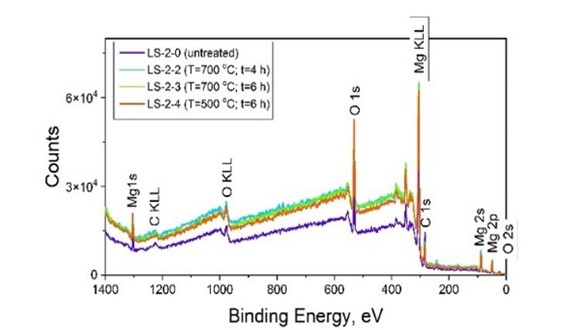
Graphycal Abstract: Two methods for synthesizing MgO nanoparticles using sodium lauryl sulphate and Aloe Vera extract as dispersing agents are described. Varying dispersing agent quantities and calcination temperatures were applied. The morphology and size were characterized using SEM-EDX and XRD, confirming successful synthesis and structure of the MgO nanoparticles.
Downloads: 73
Author(s):
Field: Inorganic and coordination chemistry
Type: Research paper
Issue: 2025 Volume 20, no.2
Pages: 25-32
Viorina Gorinchoy, Sergiu Shova, Olga Kulikova, Gheorghe Roman, Vasile Lozan
Field: Inorganic and coordination chemistry
Type: Research paper
Issue: 2025 Volume 20, no.2
Pages: 25-32
Full Text (PDF): Download
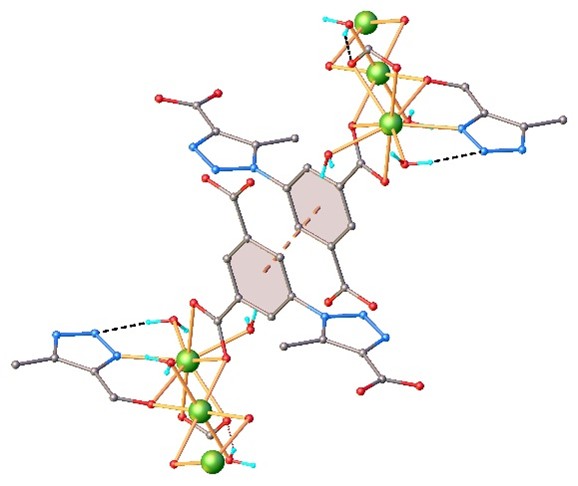
Graphycal Abstract: A new cadmium(II) polymeric complex was synthesized under solvothermal conditions by the reaction of 5-(4-carboxy-5-methyl-1H-1,2,3-triazol-1-yl)isophthalic acid (H3L) with cadmium nitrate tetrahydrate in a mixture of N,N-dimethylacetamide and water. The polymeric complex is an infinite 2D coordination polymer with the general formula {[Cd3L2(H2O)6]·2H2O}n. The two-dimensional coordination polymer {[Cd3L2(H2O)6]}n presents p–p stacking interactions between benzene rings of adjacent 2D coordination polymers, which contribute along with numerous O-H---O H-bonds to the assembly of a 3D supramolecular assembly. The intense photoluminescence emission of cadmium(II) complex is observed in the blue-violet region of the spectrum.
Downloads: 67
Author(s):
Field: Natural product chemistry and synthesis
Type: Research paper
Issue: 2025 Volume 20, no.2
Pages: 65-71
Achraf Khaldi, Abdelkader Elhadj Berrezig, Amina Mazeri, Kheira Mehdi, Rahima Hadjer Gouabi
Field: Natural product chemistry and synthesis
Type: Research paper
Issue: 2025 Volume 20, no.2
Pages: 65-71
Full Text (PDF): Download
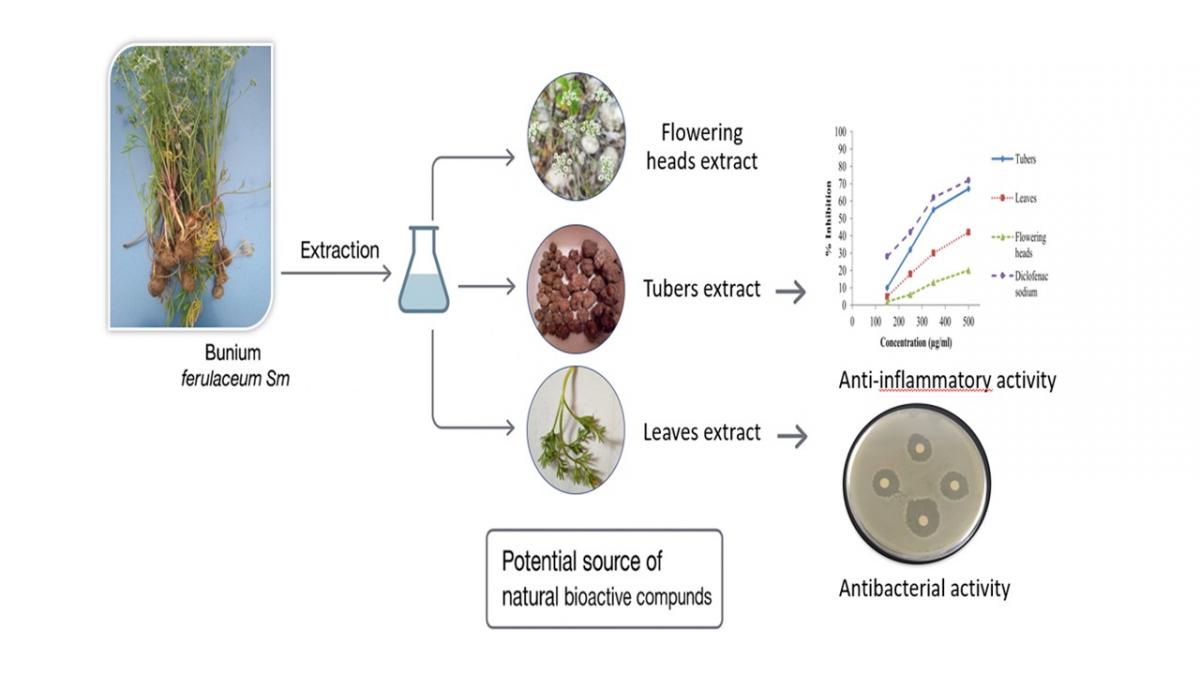
Graphycal Abstract: Hydro-methanolic extracts of Bunium ferulaceum leaves, flowering heads, and tubers show organ-dependent phytochemical variation. Leaves are richest in phenolics and flavonoids, while tubers contain the highest triterpene levels. Polyphenol content correlates strongly with antibacterial activity, whereas triterpenes are tightly linked to anti-inflammatory effects. These complementary chemical–biological relationships highlight the plant’s multifunctional pharmacological potential, supporting further isolation and mechanistic studies.
Downloads: 97
Author(s):
Field: Organic chemistry
Type: Research paper
Issue: 2025 Volume 20, no.2
Pages: 72-83
Lili Dahiana Becerra, Carlos Coy-Barrera, Diego Quiroga
Field: Organic chemistry
Type: Research paper
Issue: 2025 Volume 20, no.2
Pages: 72-83
Full Text (PDF): Download
https://doi.org/10.19261/cjm.2025.1367
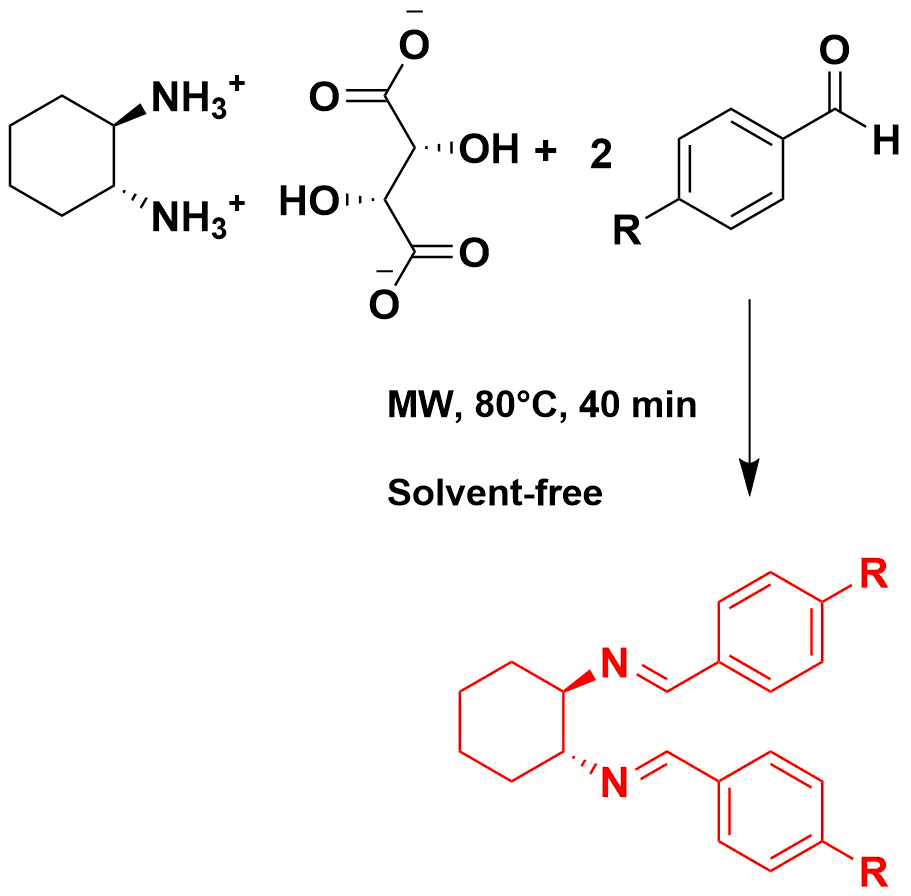
Graphycal Abstract: In this work, the synthesis of Schiff bases derived from trans-(R,R)-diaminocyclohexane by microwave irradiation (MW) is presented. The reaction yields varied between 31% and 69%, being influenced by the electronic nature of the substituents (H, Cl, Br, NO2, MeO, t-BuO, BnO, and 4-(4-Me)PhO) and the reaction temperature. The spectrophotometric properties of the products were investigated by UV-Vis spectrophotometry, revealing bathochromic and hypso-chromic effects attributable to the different substituent groups. These effects were interpreted by DFT calculations with the B3LYP functional at the 6-311G(d,p) level. The results suggest that the electronic properties of the substituents in the para position have a significant impact on the spectroscopic characteristics of the Schiff bases.
Downloads: 59
Author(s):
Field: Natural product chemistry and synthesis
Type: Research paper
Issue: 2025 Volume 20, no.2
Pages: 56-64
Maria Duca, Alexandru Ciocarlan, Ana Mutu, Steliana Clapco
Field: Natural product chemistry and synthesis
Type: Research paper
Issue: 2025 Volume 20, no.2
Pages: 56-64
Full Text (PDF): Download
https://doi.org/10.19261/cjm.2025.1340
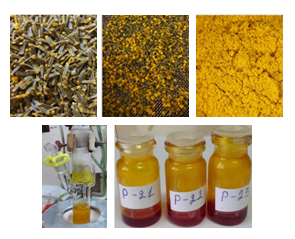
Graphycal Abstract: Lipid fractions from Helianthus annuus L. pollen collected across three Moldovan agroclimatic zones were analyzed via GC-MS after Soxhlet extraction, saponification, and methylation. Chromatographic profiling resolved >40 constituents, including: Polyunsaturated fatty acid esters (e.g., methyl linolenate, a ω-3 precursor); Diterpenoid derivatives (methyl labdatrien-19-oate); Oxygenated sterols (lanostan-3-one); Lipophilic vitamins (α-tocopherol, retinol derivatives). Chemometric analysis revealed climate-induced shifts in metabolite profiles, with heat and drought favoring terpenoid accumulation. Results highlight sunflower pollen as a structurally rich source of bioactive lipids with nutraceutical potential.
Downloads: 53
Author(s):
Field: Physical chemistry and chemical physics
Type: Research paper
Issue: 2025 Volume 20, no.2
Pages: 84-93
Maimoonah Khalid Qasim, Rabah Ali Khalil
Field: Physical chemistry and chemical physics
Type: Research paper
Issue: 2025 Volume 20, no.2
Pages: 84-93
Full Text (PDF): Download
https://doi.org/10.19261/cjm.2025.1342
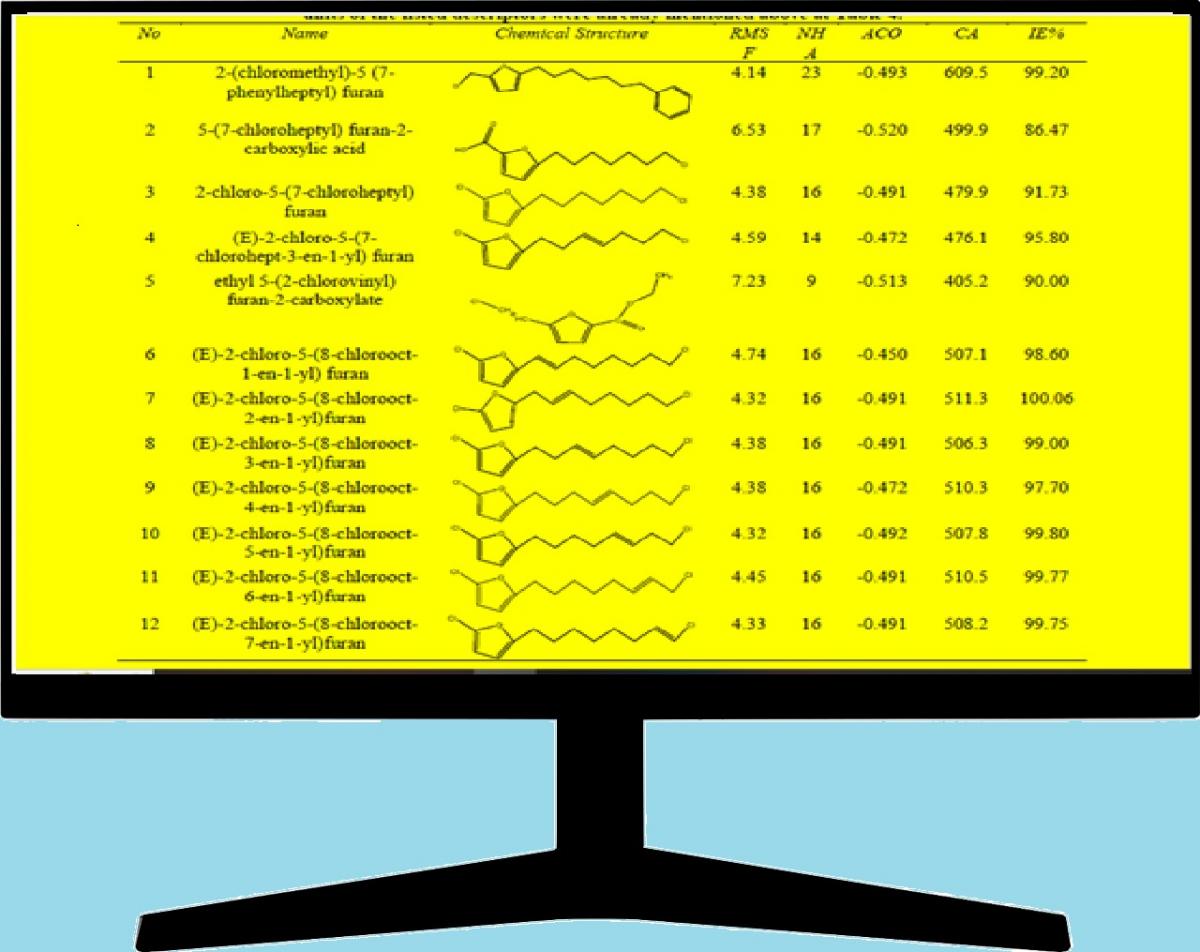
Graphycal Abstract: The contribution of in silico analysis in the development of corrosion inhibitors field by predicting adequate new molecules that could be employed for this purpose. QSAR analysis of already published experimental results of corrosion inhibition efficiency (IE%) of mild steel in acidic media for eighteen furan derivatives was performed.
Downloads: 53
Author(s):
Field: Inorganic and coordination chemistry
Type: Research paper
Issue: 2025 Volume 20, no.2
Pages: 15-24
Dumitru Ureche, Pavlina Bourosh, Ion Bulhac
Field: Inorganic and coordination chemistry
Type: Research paper
Issue: 2025 Volume 20, no.2
Pages: 15-24
Full Text (PDF): Download
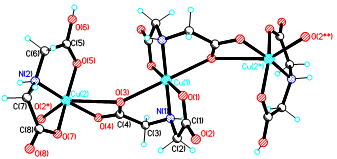
Graphycal Abstract: The synthesis of three structurally distinct copper(II) coordination compounds with iminodiacetic acid (H₂IDA) as ligand was achieved by varying the reaction pH. Under neutral conditions (pH 6–6.5), compound 1 formed as a two-dimensional ionic coordination polymer, {[NH₂(CH₃)₂]₂[Cu₃(IDA)₄]·1.75H₂O}ₙ, consisting of layered [Cu₃(IDA)₄]²ₙ⁻ anions stabilized by hydrogen-bonding networks. Under basic conditions (pH 8–8.5), compound 2 was obtained as a neutral 2D molecular polymer, {[Cu₃(IDA)₂(IDAH)₂]·5H₂O}ₙ, built from trinuclear copper units bridged by bi- and monodeprotonated ligands. Under acidic conditions (pH 3), compound 3, ((CH₃)₂OH)₂[Cu(IDA)₂]·[Cu(IDAH)₂], was isolated as an ionic structure containing neutral and anionic mononuclear complexes charge-balanced by protonated dimethylether cations.
Downloads: 45
Author(s):
Field: Natural product chemistry and synthesis
Type: Research paper
Issue: 2025 Volume 20, no.2
Pages: 45-55
Dahia Meridja, Kamel Belhamel, Mohamed Harrat, Chiraz Belhamel, Mohamed Yousfi
Field: Natural product chemistry and synthesis
Type: Research paper
Issue: 2025 Volume 20, no.2
Pages: 45-55
Full Text (PDF): Download
https://doi.org/10.19261/cjm.2025.1328
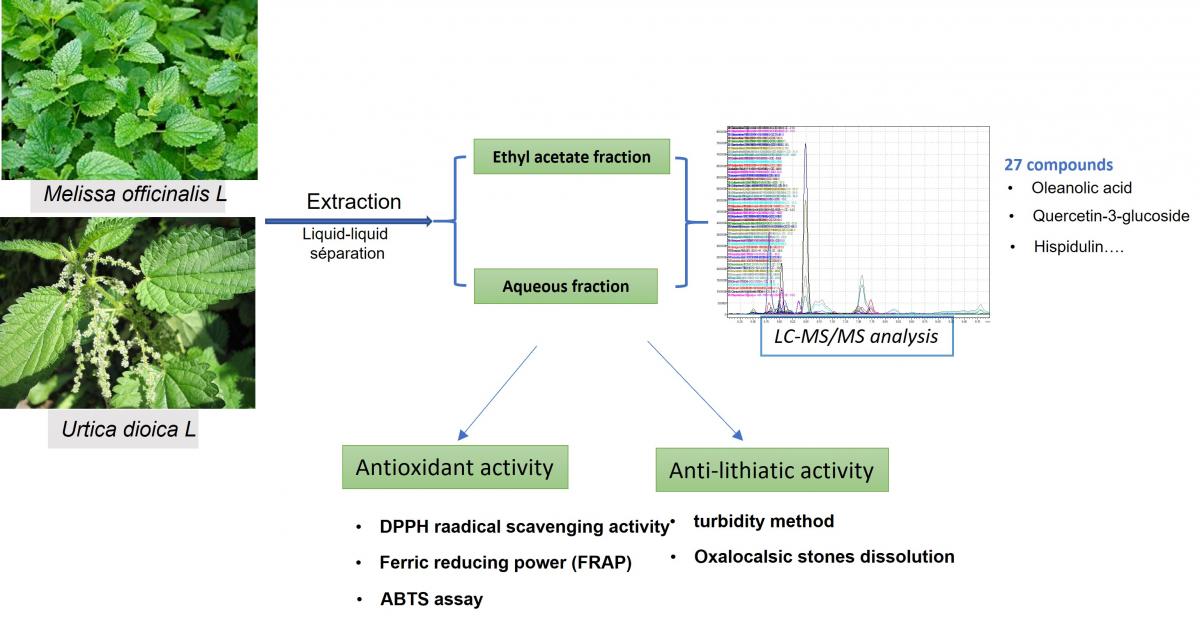
Graphycal Abstract: Melissa officinalis L. and Urtica dioica L. were evaluated for their phytochemical composition and antioxidant and anti-lithiatic activities. LC-MS/MS analysis showed that M. officinalis contained a more diverse profile, especially flavonoids and phenolic acids enriched in the ethyl acetate fraction, while U. dioica demonstrated a simpler composition dominated by myricetin, riboflavin, sinapic acid, catechin, and β-carotene in its aqueous fraction. M. officinalis ethyl acetate extract showed the strongest antioxidant capacity in DPPH, ABTS, and FRAP assays. Its aqueous extract also exhibited notable anti-lithiatic activity, inhibiting calcium oxalate crystal formation by 87.12% at 2 mg/mL.
Downloads: 94
Author(s):
Field: Ecological chemistry
Type: Research paper
Issue: 2025 Volume 20, no.2
Pages: 7-14
Nina Bagrin, Elena Zubcov, Lucia Biletchi, Natalia Borodin
Field: Ecological chemistry
Type: Research paper
Issue: 2025 Volume 20, no.2
Pages: 7-14
Full Text (PDF): Download
https://doi.org/10.19261/cjm.2025.1341
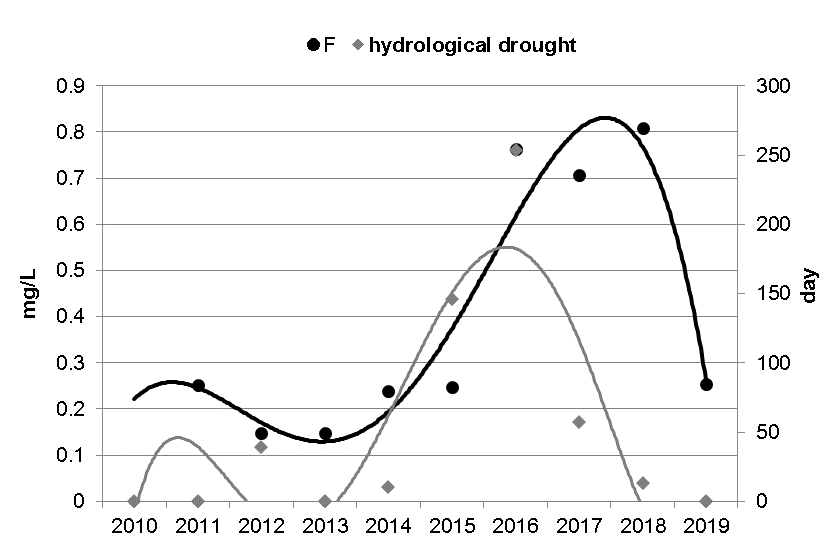
Graphycal Abstract: Concentrations of fluoride ions in the Dniester river and Dubasari reservoir, located on the territory of the Republic of Moldova, were analysed for 2011–2024. They ranged 0.05–1.07 mg/L, with higher values during low-water periods. Despite seasonal sampling, no clear dynamics were observed, due to altered hydrological regime. Fluoride levels were lower than the World Health Organization for drinking water.
Downloads: 57