Chemistry Journal of Moldova
- Journal Citation Reports for year 2025:
- Impact Factor (IF) 0.5;
- 5-year Journal IF 0.6;
- SCOPUS Journal Metrics for year 2025:
- CiteScore 0.9;
- Source Normalized Impact per Paper (SNIP) 0.334;
- SCImago Journal Rank (SJR) 0.152.



TOP DOWNLOADED ARTICLES
1. SONOCHEMICAL SYNTHESIS OF HEMATITE
NANOPARTICLES
Mihail Iacob
(downloads: 1360)
2. THE ROLE OF HALOGEN BONDING IN THE
SYNTHESIS AND DESIGN OF TAP COMPLEXES
Namiq Shikhaliyev, Ayten Niyazova, Abel Maharramov, Agaisa Askerov, Nazrin Zeynalli, Viktor Khrustalev, Peri Huseynova
(downloads: 953)
3. SILVER AND ZINC NANOPARTICLES
BIOSYNTHESIS USING LAUREL EXTRACT AND
INVESTIGATION OF THE PHOTOCATALYTIC
PROPERTIES
Recep Taş, Ebru Köroğlu, Ahmet Karakuş, Ali Savaş Bülbül, Nilay Akkuş Taş
(downloads: 916)
4. SYNTHESIS OF DIFFERENT STRUCTURAL TYPES
OF ZEOLITES IN THE
HALLOYSITE-DOLOMITE-OBSIDIAN SYSTEM
Gunel Mamedova
(downloads: 874)
5. DERIVATIZATION TECHNIQUES BASED ON
CHARGE TRANSFER REACTIONS FOR
SPECTROPHOTOMETRIC DETERMINATION OF
JOSAMYCIN IN VARIOUS DOSAGE FORMS
Abdelghani Mahmoudi and Ann Van Schepdael
(downloads: 833)
6. A NOVEL GREEN SYNTHESIS OF NICKEL OXIDE
NANOPARTICLES USING ARABIC GUM
Saeid Taghavi Fardood, Ali Ramazani, Sajjad Moradi
(downloads: 812)
7. SYNTHESIS, CHARACTERIZATION AND
MOLECULAR DOCKING OF CHLORO-SUBSTITUTED
HYDROXYXANTHONE DERIVATIVES
Emmy Yuanita, Harno Dwi Pranowo, Mustofa Mustofa, Respati Tri Swasono, Jufrizal Syahri, Jumina Jumina
(downloads: 670)
8. ORGANOCHLORINE PESTICIDES RESIDUES IN
SOIL OF SOROCA DISTRICT, REPUBLIC OF
MOLDOVA
Elena Culighin
(downloads: 509)
9. ROLE OF CYCLODEXTRINS IN NEW
ANTIMYCOBACTERIAL FORMULATIONS
Veaceslav Boldescu, Fliur Macaev, Gheorghe Duca
(downloads: 505)
10. INVESTIGATION OF VARIOUS INFLUENCING
FACTORS OF HYDROTHERMAL SYNTHESIS OF
ANALCIME ZEOLITE
Gunel Mamedova, Gunel Nasirli
(downloads: 495)
NANOPARTICLES
Mihail Iacob
(downloads: 1360)
2. THE ROLE OF HALOGEN BONDING IN THE
SYNTHESIS AND DESIGN OF TAP COMPLEXES
Namiq Shikhaliyev, Ayten Niyazova, Abel Maharramov, Agaisa Askerov, Nazrin Zeynalli, Viktor Khrustalev, Peri Huseynova
(downloads: 953)
3. SILVER AND ZINC NANOPARTICLES
BIOSYNTHESIS USING LAUREL EXTRACT AND
INVESTIGATION OF THE PHOTOCATALYTIC
PROPERTIES
Recep Taş, Ebru Köroğlu, Ahmet Karakuş, Ali Savaş Bülbül, Nilay Akkuş Taş
(downloads: 916)
4. SYNTHESIS OF DIFFERENT STRUCTURAL TYPES
OF ZEOLITES IN THE
HALLOYSITE-DOLOMITE-OBSIDIAN SYSTEM
Gunel Mamedova
(downloads: 874)
5. DERIVATIZATION TECHNIQUES BASED ON
CHARGE TRANSFER REACTIONS FOR
SPECTROPHOTOMETRIC DETERMINATION OF
JOSAMYCIN IN VARIOUS DOSAGE FORMS
Abdelghani Mahmoudi and Ann Van Schepdael
(downloads: 833)
6. A NOVEL GREEN SYNTHESIS OF NICKEL OXIDE
NANOPARTICLES USING ARABIC GUM
Saeid Taghavi Fardood, Ali Ramazani, Sajjad Moradi
(downloads: 812)
7. SYNTHESIS, CHARACTERIZATION AND
MOLECULAR DOCKING OF CHLORO-SUBSTITUTED
HYDROXYXANTHONE DERIVATIVES
Emmy Yuanita, Harno Dwi Pranowo, Mustofa Mustofa, Respati Tri Swasono, Jufrizal Syahri, Jumina Jumina
(downloads: 670)
8. ORGANOCHLORINE PESTICIDES RESIDUES IN
SOIL OF SOROCA DISTRICT, REPUBLIC OF
MOLDOVA
Elena Culighin
(downloads: 509)
9. ROLE OF CYCLODEXTRINS IN NEW
ANTIMYCOBACTERIAL FORMULATIONS
Veaceslav Boldescu, Fliur Macaev, Gheorghe Duca
(downloads: 505)
10. INVESTIGATION OF VARIOUS INFLUENCING
FACTORS OF HYDROTHERMAL SYNTHESIS OF
ANALCIME ZEOLITE
Gunel Mamedova, Gunel Nasirli
(downloads: 495)



Natural product chemistry and synthesis
Author(s):
Field: Natural product chemistry and synthesis
Type: Research paper
Issue: 2026 Volume 21, no.1
Pages: 94-102
Emmanuel Nnamdi Ifedi, Olayombo Margaret Banwo, Olakunle Alex Akinsanoye, Oluwadurotimi Olutosin Akintade
Field: Natural product chemistry and synthesis
Type: Research paper
Issue: 2026 Volume 21, no.1
Pages: 94-102
Full Text (PDF): Download
https://doi.org/10.19261/cjm.2026.1474
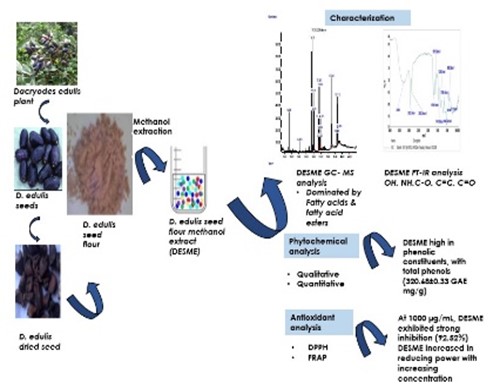
Graphycal Abstract: Dacryodes edulis seed flour methanol extract (DESME) was analysed for bioactive compounds and antioxidant properties. GC-MS analysis identified fifteen compounds, with 9-Octadecenoic acid as the most prominent. Phytochemical analysis revealed a high phenolic content of 320.68±0.33 GAE mg/g and strong antioxidant inhibition (92.52%).
Downloads: 85
Author(s):
Field: Natural product chemistry and synthesis
Type: Research paper
Issue: 2026 Volume 21, no.1
Pages: 103-111
Atabek Bayniyazov, Utkir Kurbanov, Gulbaxar Tilovova, Bakhtiyar Abdurakhmanov, Ravshanjon Khalilov, Munira Allaeva, Jaloliddin Abdurakhmanov, Dilmurodjon Turdaliyev, Shakhnoz Azimova
Field: Natural product chemistry and synthesis
Type: Research paper
Issue: 2026 Volume 21, no.1
Pages: 103-111
Full Text (PDF): Download
https://doi.org/10.19261/cjm.2026.1463
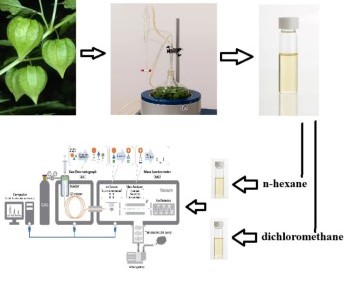
Graphycal Abstract: The chemical composition of essential oils from Physalis angulata L. fruits from Parkent district was investigated by GC–MS. The n-hexane extract contained 59 compounds (96.3%), predominantly fatty acids, with n-hexadecanoic acid (21.13%) and conjugated linoleic acid (9.46%) as major constituents. The dichloromethane extract contained 34 compounds (80.15%), mainly oxygenated volatiles, including 1-hexanol (24.03%), furfural (6.04%), and 3-hexen-1-ol (5.10%). Solvent polarity influenced extraction selectivity, with n-hexane enriching fatty acids and dichloromethane favouring oxygenated compounds. The dichloromethane extract showed the strongest antimicrobial activity against Bacillus subtilis (19 ± 0.12 mm), while the n-hexane extract was less active. These findings demonstrate that solvent-dependent extraction shapes the chemical composition and antimicrobial potential of P. angulata fruit essential oils.
Downloads: 40
Author(s):
Field: Natural product chemistry and synthesis
Type: Research paper
Issue: 2025 Volume 20, no.2
Pages: 94-100
Alexandru Ciocarlan, Ion Dragalin, Violeta Popescu, Lidia Lungu, Lucian Lupascu, Aculina Aricu, Tatiana Calugaru-Spataru, Zinaida Balmus, Dmitrii Grozdov, Pavel Nekhoroshkov, Inga Zinicovscaia
Field: Natural product chemistry and synthesis
Type: Research paper
Issue: 2025 Volume 20, no.2
Pages: 94-100
Full Text (PDF): Download
https://doi.org/10.19261/cjm.2025.1411
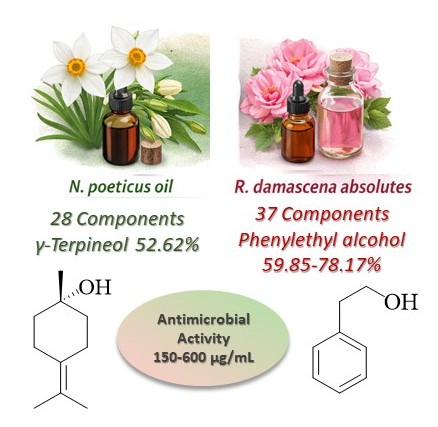
Graphycal Abstract: The chemical composition and antimicrobial activity of Narcissus poeticus L. essential oil and Rosa damascena Mill. absolutes of Moldovan origin were studied. Using GC–MS analysis 28 constituents of N. poeticus essential oil and 37 of R. damascena absolutes were identified. The γ-terpineol (52.62%) was the main component of N. poeticus oil, while the phenylethyl alcohol predominated in R. damascena absolutes (59.85–78.17%). Both products exhibited strong in vitro antibacterial and antifungal activity against four bacterial strains and two fungal species, with effective concentrations of 150–300 μg/mL and 300–600 μg/mL, respectively.
Downloads: 155
Author(s):
Field: Natural product chemistry and synthesis
Type: Research paper
Issue: 2025 Volume 20, no.2
Pages: 65-71
Achraf Khaldi, Abdelkader Elhadj Berrezig, Amina Mazeri, Kheira Mehdi, Rahima Hadjer Gouabi
Field: Natural product chemistry and synthesis
Type: Research paper
Issue: 2025 Volume 20, no.2
Pages: 65-71
Full Text (PDF): Download
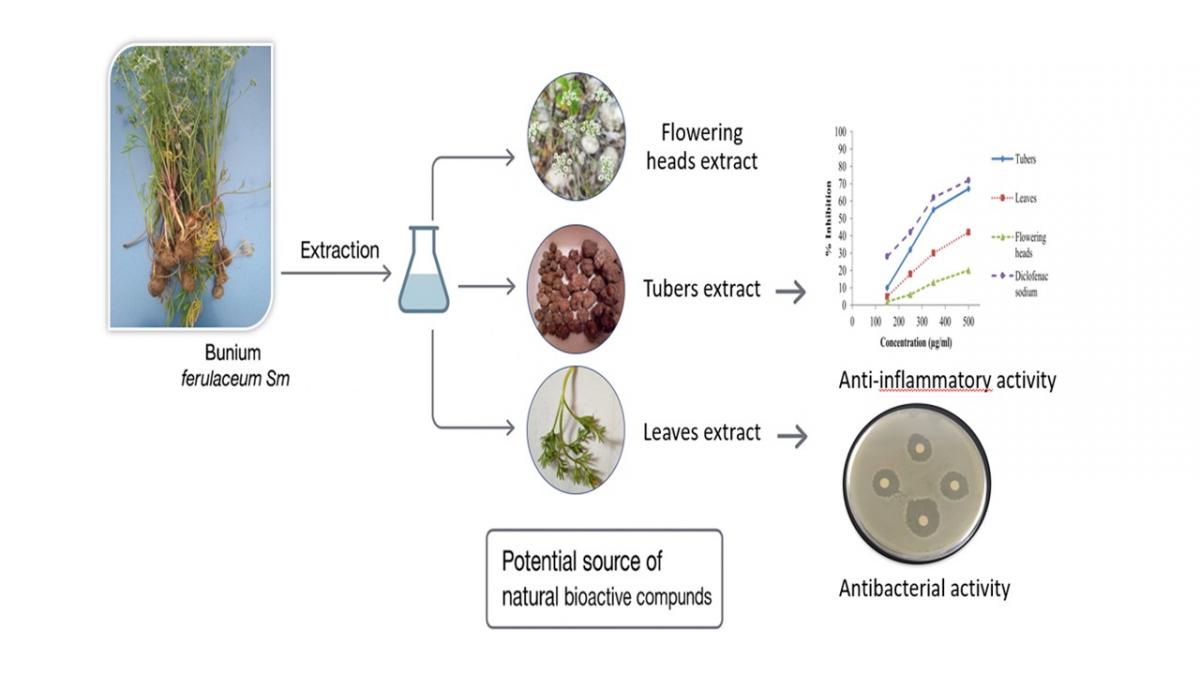
Graphycal Abstract: Hydro-methanolic extracts of Bunium ferulaceum leaves, flowering heads, and tubers show organ-dependent phytochemical variation. Leaves are richest in phenolics and flavonoids, while tubers contain the highest triterpene levels. Polyphenol content correlates strongly with antibacterial activity, whereas triterpenes are tightly linked to anti-inflammatory effects. These complementary chemical–biological relationships highlight the plant’s multifunctional pharmacological potential, supporting further isolation and mechanistic studies.
Downloads: 97
Author(s):
Field: Natural product chemistry and synthesis
Type: Research paper
Issue: 2025 Volume 20, no.2
Pages: 56-64
Maria Duca, Alexandru Ciocarlan, Ana Mutu, Steliana Clapco
Field: Natural product chemistry and synthesis
Type: Research paper
Issue: 2025 Volume 20, no.2
Pages: 56-64
Full Text (PDF): Download
https://doi.org/10.19261/cjm.2025.1340
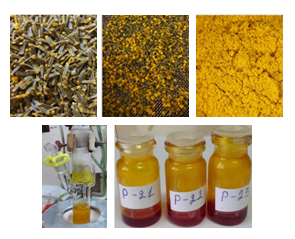
Graphycal Abstract: Lipid fractions from Helianthus annuus L. pollen collected across three Moldovan agroclimatic zones were analyzed via GC-MS after Soxhlet extraction, saponification, and methylation. Chromatographic profiling resolved >40 constituents, including: Polyunsaturated fatty acid esters (e.g., methyl linolenate, a ω-3 precursor); Diterpenoid derivatives (methyl labdatrien-19-oate); Oxygenated sterols (lanostan-3-one); Lipophilic vitamins (α-tocopherol, retinol derivatives). Chemometric analysis revealed climate-induced shifts in metabolite profiles, with heat and drought favoring terpenoid accumulation. Results highlight sunflower pollen as a structurally rich source of bioactive lipids with nutraceutical potential.
Downloads: 53
Author(s):
Field: Natural product chemistry and synthesis
Type: Research paper
Issue: 2025 Volume 20, no.2
Pages: 45-55
Dahia Meridja, Kamel Belhamel, Mohamed Harrat, Chiraz Belhamel, Mohamed Yousfi
Field: Natural product chemistry and synthesis
Type: Research paper
Issue: 2025 Volume 20, no.2
Pages: 45-55
Full Text (PDF): Download
https://doi.org/10.19261/cjm.2025.1328
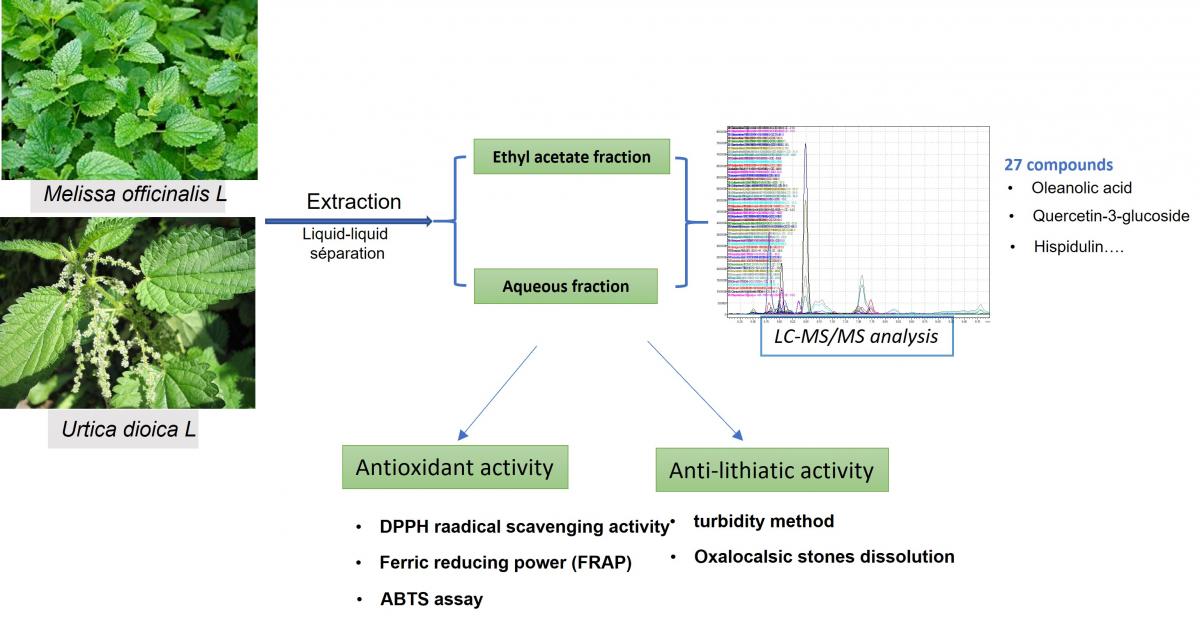
Graphycal Abstract: Melissa officinalis L. and Urtica dioica L. were evaluated for their phytochemical composition and antioxidant and anti-lithiatic activities. LC-MS/MS analysis showed that M. officinalis contained a more diverse profile, especially flavonoids and phenolic acids enriched in the ethyl acetate fraction, while U. dioica demonstrated a simpler composition dominated by myricetin, riboflavin, sinapic acid, catechin, and β-carotene in its aqueous fraction. M. officinalis ethyl acetate extract showed the strongest antioxidant capacity in DPPH, ABTS, and FRAP assays. Its aqueous extract also exhibited notable anti-lithiatic activity, inhibiting calcium oxalate crystal formation by 87.12% at 2 mg/mL.
Downloads: 94
Author(s):
Field: Natural product chemistry and synthesis
Type: Research paper
Issue: 2025 Volume 20, no.1
Pages: 51-61
Abhimanyu Parasram Pawar, Kishor Sudhir Naktode, Arvind Janardhan Mungole, Srinivas Angac
Field: Natural product chemistry and synthesis
Type: Research paper
Issue: 2025 Volume 20, no.1
Pages: 51-61
Full Text (PDF): Download
https://doi.org/10.19261/cjm.2025.1308
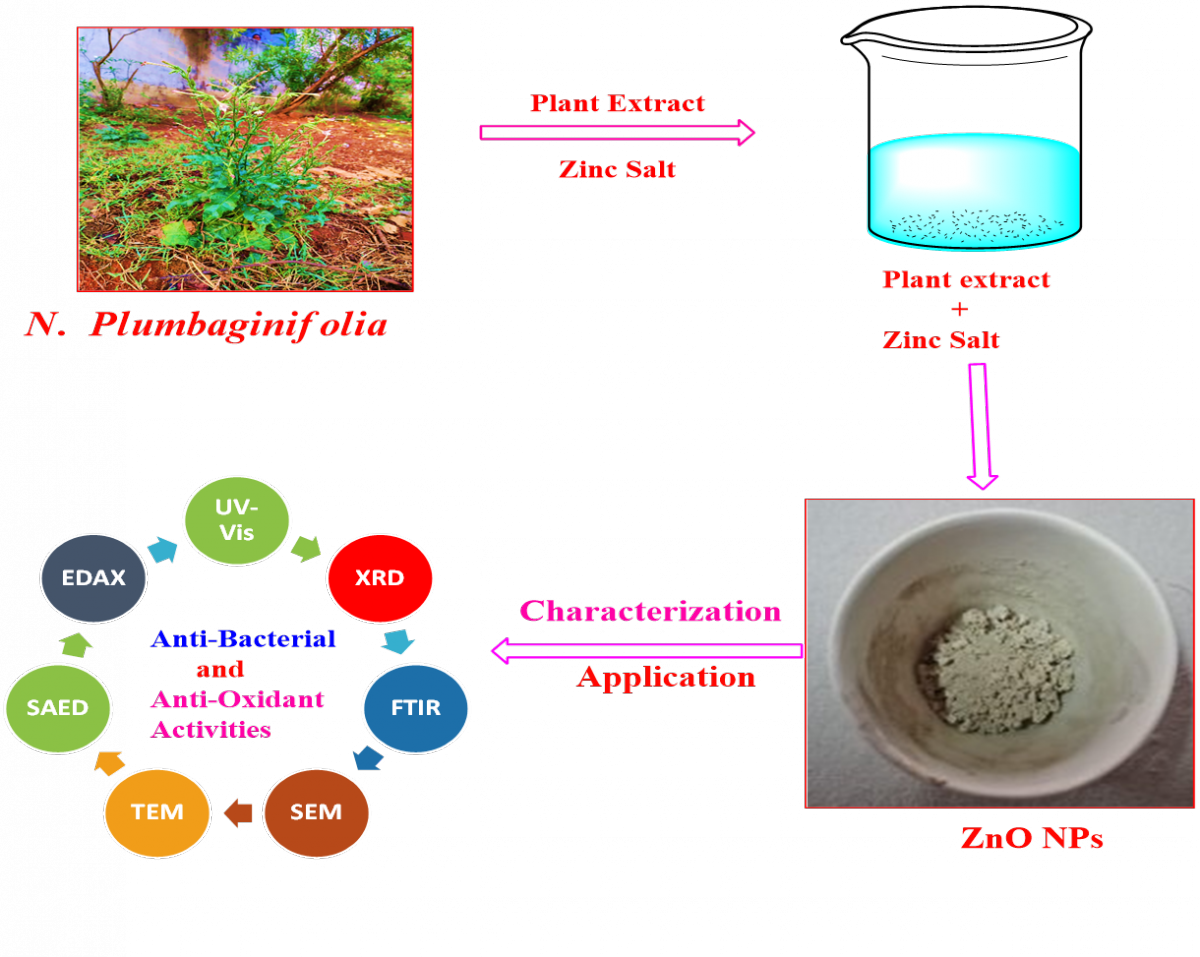
Graphycal Abstract: Zinc oxide nanoparticles (ZnO NPs) were synthesized using Nicotiana plumbaginifolia plant extract through a green approach. XRD, FTIR, and EDX confirmed their hexagonal wurtzite structure and high purity. SEM and TEM showed spherical ZnO NPs (16–24 nm), with a band gap of 3.33 eV. FTIR spectra displayed a peak at 480 cm⁻¹, confirming Zn–O bond formation. The ZnO NPs exhibited strong antibacterial activity against P. aeruginosa, E. coli,
K. pneumoniae, and S. aureus at 100 µL using the well diffusion method. They also showed excellent antioxidant potential, scavenging DPPH radicals with 75.59% inhibition at 250 μg/mL. This eco-friendly synthesis method offers a sustainable approach for ZnO NP production, highlighting their potential for biomedical and pharmaceutical applications.
K. pneumoniae, and S. aureus at 100 µL using the well diffusion method. They also showed excellent antioxidant potential, scavenging DPPH radicals with 75.59% inhibition at 250 μg/mL. This eco-friendly synthesis method offers a sustainable approach for ZnO NP production, highlighting their potential for biomedical and pharmaceutical applications.
Downloads: 170
Author(s):
Field: Natural product chemistry and synthesis
Type: Short communication
Issue: 2025 Volume 20, no.1
Pages: 100-105
Daniel Cord, Mirela Claudia Rimbu, Cristiana Tanase, Cristina Tablet, Gheorghe Duca
Field: Natural product chemistry and synthesis
Type: Short communication
Issue: 2025 Volume 20, no.1
Pages: 100-105
Full Text (PDF): Download
https://doi.org/10.19261/cjm.2025.1337
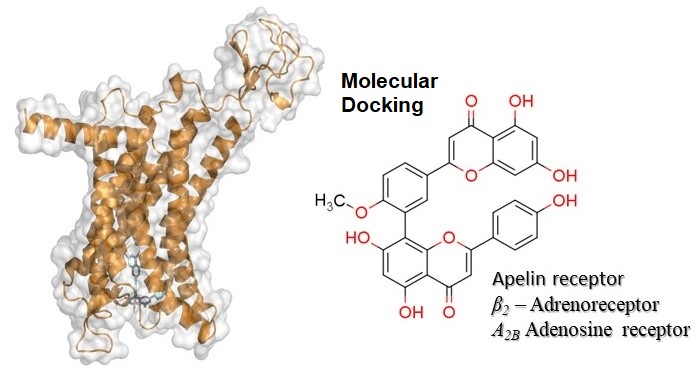
Graphycal Abstract: Interactions between various natural compounds and three selected G protein coupled receptors were investigated through molecular docking. The strongest binding affinities were identified highlighting potential modulators for these receptors.
Downloads: 142
Author(s):
Field: Natural product chemistry and synthesis
Type: Research paper
Issue: 2024 Volume 19, no.2
Pages: 63-73
Lyubov Patrylak, Serhiy Konovalov, Stepan Zubenko, Angela Yakovenko, David Davitadze, Olexandra Pertko
Field: Natural product chemistry and synthesis
Type: Research paper
Issue: 2024 Volume 19, no.2
Pages: 63-73
Full Text (PDF): Download
https://doi.org/10.19261/cjm.2024.1236
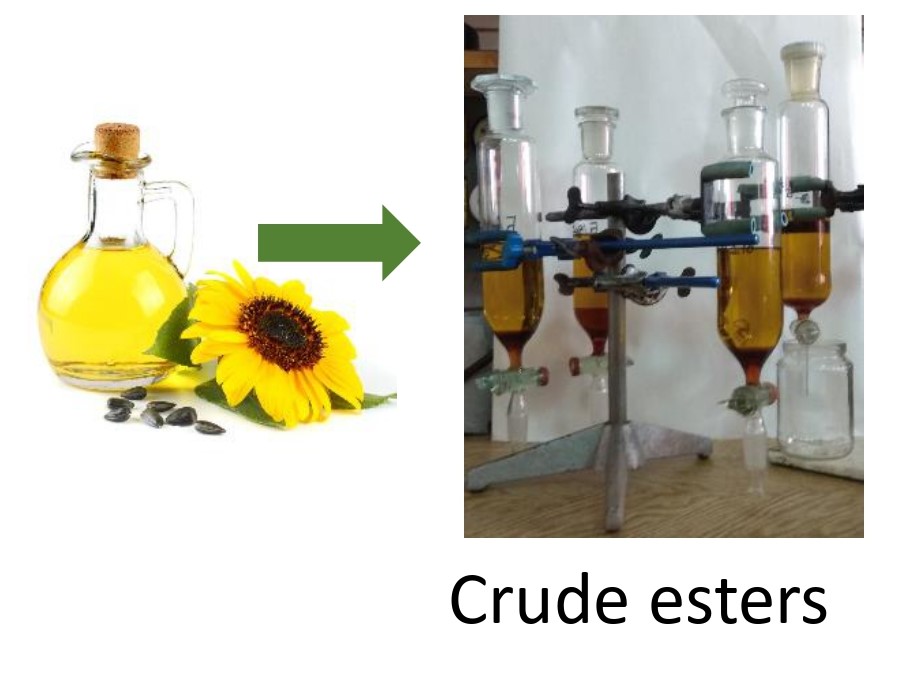
Graphycal Abstract: The efficiency of removing glycerol, soaps, and unconverted acylglycerols from crude fatty acid ethyl esters by different techniques was evaluated. The proposed purification scheme allows for obtaining a product that meets the quality indicators of EN 14214 and can be used as a biodiesel fuel component.
Downloads: 91
Author(s):
Field: Natural product chemistry and synthesis
Type: Research paper
Issue: 2024 Volume 19, no.2
Pages: 52-62
Radia Hannache, Radia Ayad, Nassima Boutaoui, Hayat Bourekoua, Mostefa Lefahal, El Hani Makhloufi, Nabila Souilah, Salah Akkal, Kamel Medjroubi
Field: Natural product chemistry and synthesis
Type: Research paper
Issue: 2024 Volume 19, no.2
Pages: 52-62
Full Text (PDF): Download
https://doi.org/10.19261/cjm.2024.1221
Abstract (PDF)
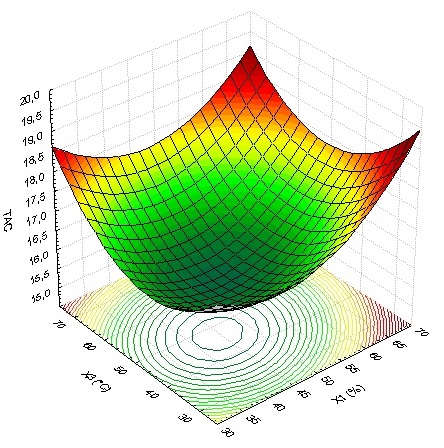
Graphycal Abstract: The current study aims to maximize the recovery of antioxidant phenolics from Algerian Trifolium tomentosum L. using an innovative green process: ultrasonic assisted extraction (UAE). Using response surface methodology (RSM), the optimal UAE parameters for maximum responses (total phenolic content, total flavonoid content, and total antioxidant capacity) were 70% ethanol concentration, 30.45 minutes of extraction time, and 75°C extraction temperature.
Downloads: 81